Leave-in: what it actually does, and how to use it properly
· By Aude Cosmetics Team, Hair care and advice
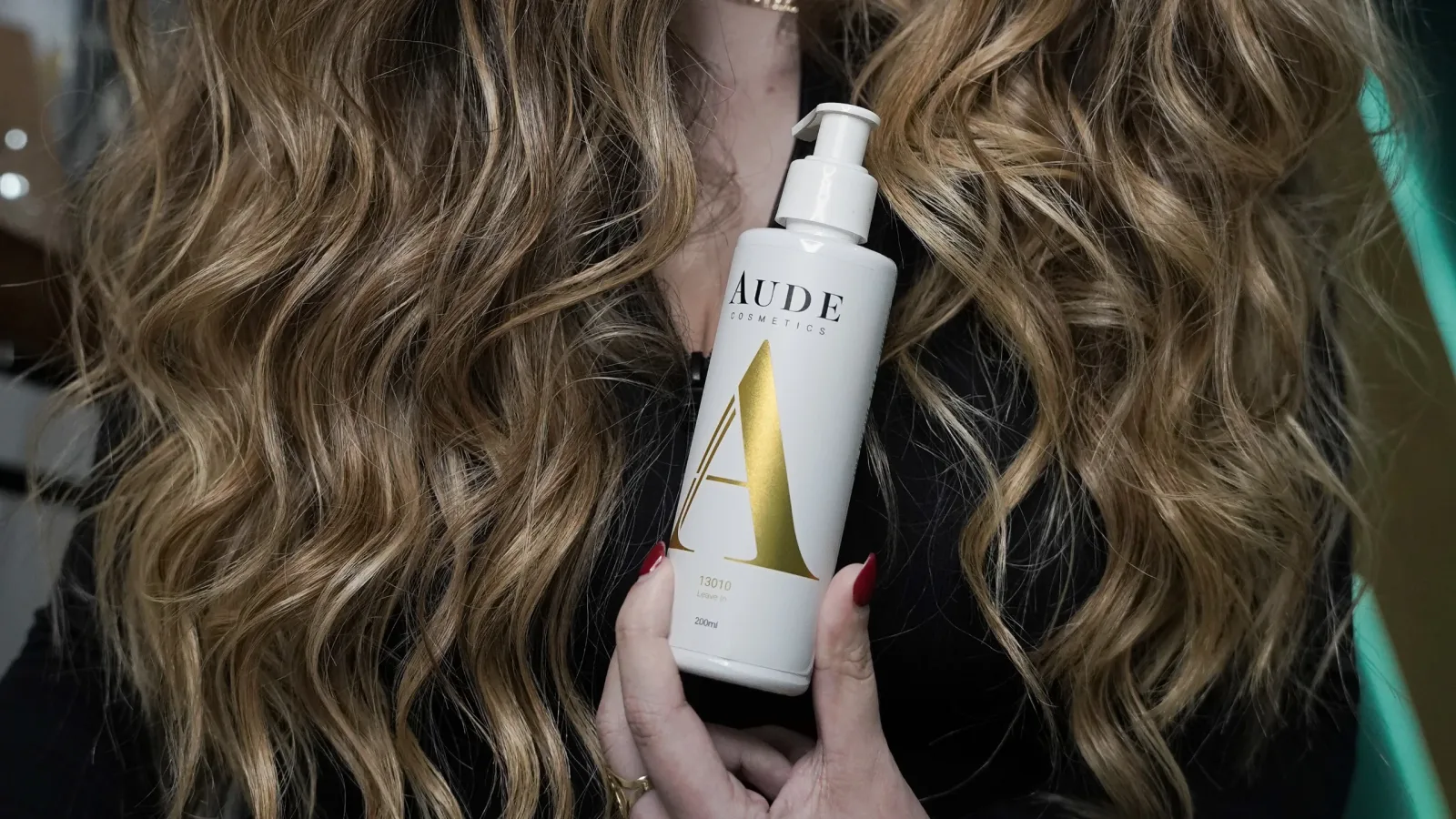
There is one step most people skip between the shower and the front door, and it is the step that quietly decides how your hair behaves for the rest of the day.
A leave-in is not a conditioner you forgot to rinse out. It is a product designed to stay on the hair and keep working while you dry it, style it, sweat in it, walk into the sun with it and sleep on it. That is the whole point: a mask works for the ten minutes it is on your head, a leave-in works for the next sixteen hours.
What a leave-in actually is
Think of the three products as doing three different jobs.
- Shampoo cleans.
- Conditioner or mask repairs and hydrates during the wash, then gets rinsed away.
- Leave-in stays. It is the layer that sits on the fibre afterwards and takes the hits: humidity, heat, friction, salt, sun.
That last one is the job nobody assigns to anything else. Most damaged hair is not damaged in the shower — it is damaged in the hours after it, and that is exactly the window a leave-in covers.
How to apply it — this is where the result is won or lost
Almost every "leave-ins don't work on my hair" story turns out to be an application problem. Four things matter:
- Damp hair, not soaking wet, not bone dry. Towel-dry first, or squeeze the water out with a cotton t-shirt. If the hair is dripping, the product dilutes and runs off. If it is completely dry, it sits on the surface instead of spreading.
- Mid-lengths and ends. Never the roots. The ends are the oldest part of your hair and the part that has been through the most; the scalp already produces its own oil and does not need help. Product at the roots is the reason hair looks flat by the afternoon.
- Less than you think. Short hair: one or two sprays or a pea-sized amount. Mid-length: three or four. Long or very thick hair: five or six, applied in sections rather than all at the crown. You can always add more; you cannot take it back out without washing again.
- Distribute it properly. Rub it between your palms first, then work it through with your fingers and finish with a wide-tooth comb. Product that stays in one spot does nothing for the rest of the hair.
Then style as usual — air dry, blow-dry, flat iron, plait it, whatever you normally do.
Five ordinary days when a leave-in changes the outcome
The beach day
Sun, salt and wind in the same afternoon is about the harshest combination your hair meets all year. Sunlight degrades the pigment and weakens the fibre's surface; salt water pulls moisture out of it; wind does the mechanical damage while it is dry and brittle.
A leave-in with a solar filter is the practical answer — apply it before you leave, concentrating on the ends, and reapply after swimming. It is the same logic as sunscreen for your skin: the point is to put it on before, not to repair afterwards.
If you colour your hair, this one matters more than any other tip on this page. A summer of unprotected sun does more to your colour than the weeks between salon visits ever will.
Training days
Sweat is salt water, and it evaporates out of the hair leaving the salt behind. That is why hair feels rough and straw-like after a few sessions in a row, and it is why people who train end up washing far more often than their hair can comfortably take.
Applying a leave-in to the ends before training builds a small barrier that keeps the salt off the fibre. Tie the hair up loosely afterwards rather than in a tight elastic on wet hair — that combination is where breakage at the ponytail line comes from.
The morning your hair will not detangle
Damaged hair tangles because the cuticle is lifted and rough, so the strands catch on each other instead of sliding past. Pulling a brush through it is not a technique, it is a decision to remove the tangle by breaking the hair.
A leave-in lubricates the fibre so the strands slide. Apply it, wait a minute, then start combing from the ends upwards, in small sections, with a wide-tooth comb. The difference is immediate, and over a few months it shows up as ends that stop splitting quite so fast.
Curly and wavy hair
Frizz is what happens when dry hair reaches for moisture in the air. The fibre swells unevenly, the cuticle lifts, and the curl loses its shape. Hydrating the hair and sealing it is the actual fix — not weighing it down until it stops moving.
A well-applied leave-in does both: it controls the frizz and leaves the curl defined but still moving, which is the result most people are actually after. Apply it to soaking-damp curls, scrunch upwards, and let it dry without touching it.
The blow-dry you want to survive until tomorrow
A style holds when the fibre is hydrated and smooth. Dry, rough hair absorbs humidity from the air within a couple of hours and reverts. A leave-in applied before drying makes the style hold noticeably longer, and it means the flat iron passes over hair that has some protection on it rather than bare fibre.
What panthenol is doing in there
Panthenol — vitamin B5 — is one of the few ingredients where the label claim and the science agree. It is a humectant: it draws water into the hair fibre and helps hold it there, which is why hair treated with it feels softer and more elastic rather than just coated.
That elasticity is the important part. Hair that bends without snapping is hair that stays on your head. Most people who feel their hair "never grows" are not growing it slowly — they are losing the length at the ends as fast as they gain it at the roots. Strengthening the fibre so it stops breaking is what makes the length finally show up.
After a keratin or smoothing treatment
If you have had a smoothing treatment done, the home routine is what decides whether it lasts four months or two. A leave-in is the easiest part of that routine to keep up, because it takes ten seconds and does not require you to change how you wash.
We wrote about the treatment side of that in our article on formaldehyde-free smoothing, which goes into what the treatment does and what maintenance actually involves.
Four mistakes worth avoiding
- Using it on the scalp. It does nothing useful there and makes the roots look greasy.
- Using too much. Heavy, sticky, flat hair is almost always an overdose, not the wrong product.
- Using it instead of a mask. They are not interchangeable. A mask repairs during the wash; a leave-in protects afterwards. Damaged hair needs both.
- Applying it and then immediately tying the hair up tightly while wet. Wet hair is at its most fragile. Let it dry, or tie it loosely.
Common questions
Can I use a leave-in every day?
Yes — that is exactly what it is built for. Apply it to damp hair after every wash, and between washes refresh just the ends on dry hair with a much smaller amount.
Will it make my hair look greasy?
Only if it reaches the roots, or if you use too much. Applied to mid-lengths and ends in the amounts above, it should not weigh the hair down at all. If your hair feels heavy, halve the dose before you blame the bottle.
Leave-in or serum — which one do I need?
They do different jobs. A leave-in is water-based, goes on damp hair, and hydrates and protects the whole length. A serum is an oil-based finisher you apply to dry ends for shine and to seal them. People with damaged hair usually end up using both, in that order.
Can I apply it to dry hair?
Yes, to calm frizz or revive the ends mid-week. Use noticeably less, warm it between your palms first, and stay well away from the roots.
Does it replace a heat protectant?
It leaves a layer on the fibre that would not otherwise be there, which already beats running a flat iron over bare hair. But if you straighten often — several times a week, at high temperature — you want a dedicated product for it, such as Total Control 13014.
How to choose a leave-in
Whichever one you end up buying, ours or anyone else's, three things are worth checking:
- A humectant near the top of the ingredient list — panthenol, glycerin. That is the part actually doing the hydrating.
- A solar filter, if you spend time outdoors or colour your hair.
- A texture that suits your hair. Fine hair does better with a spray or a light milk; thick, coarse or curly hair can carry a cream without going flat.
Then apply it the way described above — because the best formula on the market, put on the roots of soaking wet hair, will disappoint you just the same.
Leave In 13010 (200 ml) is our answer to that list: suitable for every hair type, built around panthenol for hydration and strength, with a solar filter for beach and summer days. Damp mid-lengths and ends, then leave it alone.
If your hair is heavily damaged, or you are maintaining a smoothing treatment, it works alongside Strength & Health Mask 13003 in the wash and Shine & Strength Serum 13008 on the ends when you want extra shine. The whole range is in the catalogue.
Let us talk
We would genuinely love to hear from you. Write to us at [email protected] and tell us about your hair — what it does on a bad day, what you have already tried, what you are trying to fix. We will tell you honestly where to start.
And if you have already used something of ours, tell us how it went: what you liked, what you did not, what you would change, what you wish we made. Ask us anything about ingredients, routines or how to use a product. We read every message, and what people ask us for is how we decide what to make next.